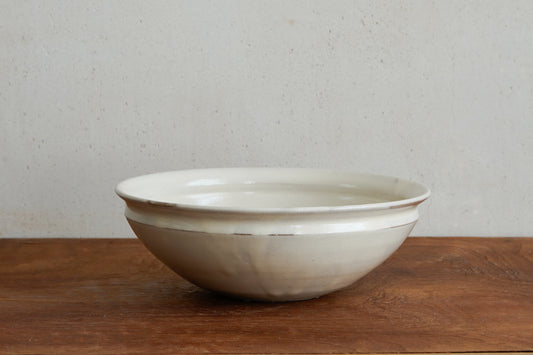
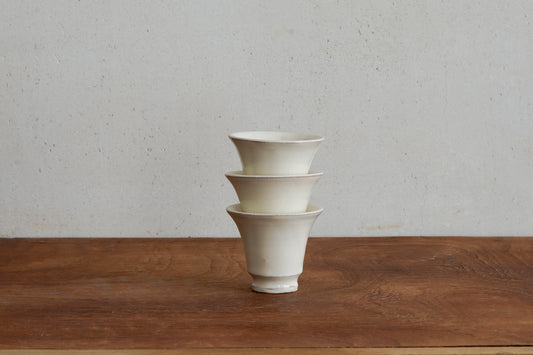
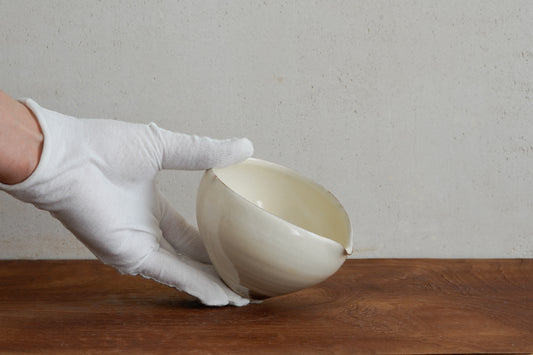
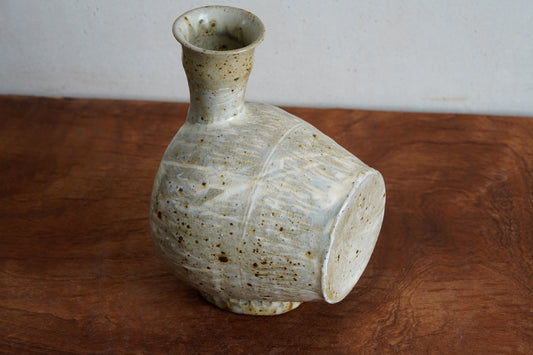
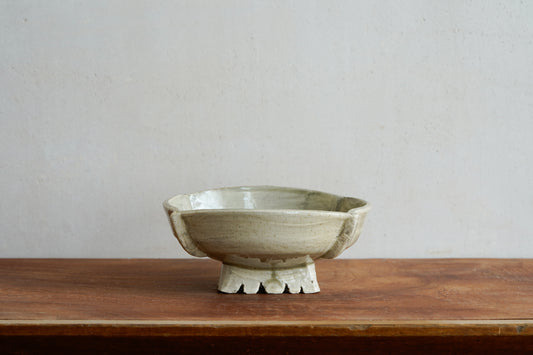
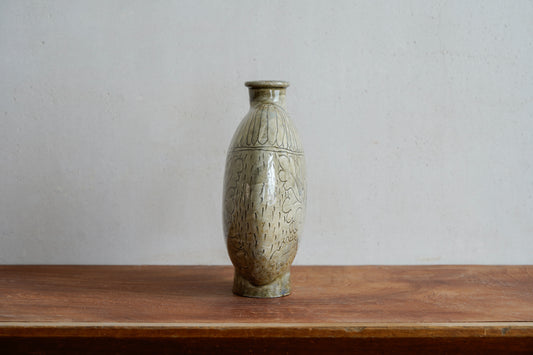
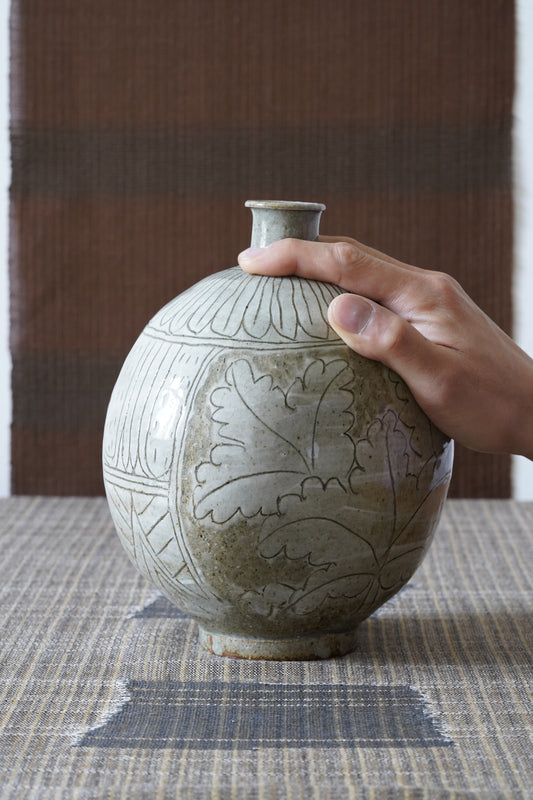
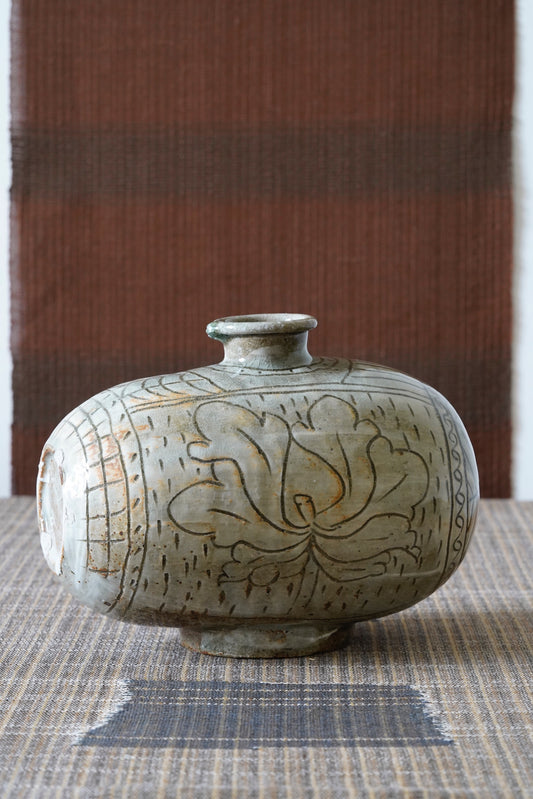
Kohiki refers to a pottery technique that produces a distinctive warm, soft white-colored finish by applying a liquid clay (slip) to the ceramics.
Most ceramics are made by applying a glassy glaze over the base clay. However, kohiki features a three-layer structure: “clay” + “white slip” + “glaze.” White slip is applied to a darker clay body before the piece is glazed and fired. The Japanese term for the white slip finish is shiro-kesho, which can be translated as “white make-up.” This method creates pottery that is soft in appearance compared to other types of pottery.
As many other pottery techniques, kohiki has it’s roots in Korean traditional pottery. Buncheong ware was produced in 15th century Korea to achieve a white pottery without using precious white clay. Many modern potters still regard Buncheong ware as the epitome of pottery art, often prized in traditional tea ceremony.
Read more about kohiki